Wednesday, July 20, 2022

Book Review Part 2

Book Review Part 2: 

Teachers and Reform: Chicago Public Education, 1929 - 1970

By John Lyons


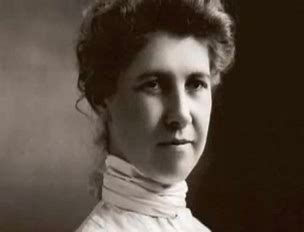
John Fewkes was the first CTU President

This is the second part of our 4-part series on the history of the Chicago Teachers Union and the Chicago Public Schools. We now take a close look at the 1930s and 1940s and the union's dilemma of fighting or joining the Chicago Machine. The CTU also joined the fight to purge communists. This is based on the book Teachers and Reform: Chicago Public Education 1929 - 1970 by John Lyons.


They say history repeats, and boy is this true for the Chicago Teachers Union (CTU). 

In the recent May election teachers voted either for the Members First caucus who focus on pay and benefits v. CORE, who want to fight for progressive legislation and social justice. It was the same choice for teachers after the CTU formed in 1937. The President was John Fewkes and he showed little interest in political and educational reform and wanted the union to focus on better salary and working conditions v. the new union executive secretary Kermit Eby who wanted the CTU to play a major role in Chicago politics and reform the public school system.

The CTU was formed under Mayor Edward Kelly who built one of the most powerful political organizations in U.S. history. His democratic machine took control of Chicago politics and public education in the mid 1930s. He was in office from 1933 - 1947. He and Patrick Nash who was head of the Cook County Democratic Party enjoyed popular support from President Franklin Roosevelt's New Deal to put people back to work during the Great Depression.

Mayor Kelly appointed seven new members to the 11-member Chicago Board of Education made up of trustees who were self-made businessmen with little experience in education and did not live in Chicago or send their kids to the city's public schools.

Mayor Kelly saw the schools as a vital source of political patronage. To overcome tenure so they could hire their friends, the board issued temporary teaching certificates to political contacts. The Board of Ed only hired teachers from the Chicago Teachers College who gained admission if they had ties to the political machine. 

How corrupt was Chicago? In 1939 Chicago was 14th of the 15 largest cities on per pupil spending on instruction, but No. 1 on spending on the schools' construction and maintenance! They hired their friends at inflated prices to work on the schools. Kelly tried to get the state to fund the city education, but just like today, the state refused, and both the city and state refused to raise taxes. So the teachers paid for it. In 1937 Chicago teachers suffered a 23 percent pay cut, while St. Louis teachers had only 4 percent cut. And the Board of Ed increasingly told teachers what to teach and supplied all the textbooks without input from the teachers. Teachers who opposed the board's patronage system were either demoted or transferred.

The conservative board trustees claimed that there were too many communists teaching the students in Chicago. The state and city politicians campaigned to enact the law of loyalty oaths for Illinois schoolteachers. Chicago was the birthplace of the U.S. Communist Party in 1919, but there were few communist teachers in Chicago, unlike NY City, and union leaders shunned communists. Chicago teachers were mostly native born of Irish, British or German, with long traditions of unionism but not communism. Poor immigrants and African-Americans were more likely to join the Communist Party.

President Roosevelt was against the teachers union and all public sector unions from achieving collective bargaining and the strike. In the 1960s the CTU finally achieved collective bargaining rights that it regained today.

Many schools at this time refused to hire married women teachers and the CTU supported legislation to discriminate against married teachers whose husbands earned more than $1500 per year. Women teachers played an active role in the union. Like today, religion played a big role for the first CTU VP Mary Herrick who was a liberal protestant who espoused egalitarianism and she elevated the CTU to national status. She taught at Phillips and DuSable High Schools and promoted racial justice. (She also wrote an excellent book The Chicago Schools.)

To encourage women to join the union, the CTU hosted tea parties, card parties, picnics, golf tournaments, dances, operettas, and movie shows. The CTU ran its own bowling league, which was a big sport in the city back then, its own dance, theater, choral and writer groups.

The CTU at this time did little to challenge racial discrimination that forced black teachers to work for less pay as subs in overcrowded black schools on the Southside. There were few black teachers in the CTU in the 1940s.

The CTU formed the Citizens School Committee (CSC) in 1933 to oppose the educational cuts and they formed strong relations with influential civic organizations including Hull House, Chicago Women's Club, and League of Women Voters, and support of Chicago churches. The CTU issued daily press releases, had a weekly paper, monthly magazine, weekly radio talk and spoke at PTAs, women's clubs and unions to shift the ideological debate and war with the Kelly-Nash Machine over education cuts and payless paydays. But they hoped the Chicago Federation of Labor (CFL) would put political pressure on the Mayor. The CTU supported Paul Douglas to become the 5th Ward Alderman in 1939 and he in turn became the only alderman to vote against Mayor Kelly in the City Council. The CTU tried hard to get Harold Ickes, secretary of the interior for Pres. Roosevelt, to run against Kelly for Mayor, but the residency rule where he had to live one year before running prevented him from being a candidate. The union encouraged its teachers to vote for candidates who supported smaller class sizes, restore teachers' pay, support collective bargaining, and uphold the merit system and asked committeemen to not use political influence to hire or promote teachers.

In June 1937 Fewkes and teachers staged a two-hour sit down in the office of the board president demanding restoration of pay, and after Fewkes threatened to send hundreds of teachers to Board of Ed every week, the president met with CTU. Fewkes was a militant union leader before he became president and was known for leading massive protests. The teachers also sent letters to the Mayor, Governor, Board of Ed members requesting restoration of pay. The Board then announced its first partial repayment to the teachers' pay. In a concession to the union over corrupt patronage, the Board appointed an independent group to control the oral part of principals' exam and entrance exam to the Chicago Teachers College.

The issue of the deteriorating conditions of the public schools and political control was the biggest topic in the 1939 Mayor Election, and all 4 candidates including Kelly agreed to eliminate politics from school administration. With Kelly about to lose, he made concessions to CTU, including more pay and more say in who is appointed to the Board of Ed, and in return CTU stopped criticizing Kelly. Kelly won in the primary and promptly sponsored a bill to restore teachers pay and teachers on maternity leave would keep their positions open for two years.

But after Kelly's re-election, the board turned against the CTU. They refused to negotiate and relations deteriorated. The Chicago Machine was still too powerful and the electorate was increasingly homeowners and parents of Catholic School kids who supported Kelly's stance on lower taxes. Catholics made up more than half of the Chicago population by the late 1930s. The CFL was close to the machine and benefited from political patronage jobs.

But as the Board paid teachers regularly now and rescinded much of their salary cut, teachers became less interested in wider educational reform. The CTU in 1940 saw its membership decrease to 56 percent of the teachers. 

Fewkes and Herrick helped to expel the communist-dominated NY and Pennsylvania teacher union locals from the American Federation of Teachers (AFT).

Fewkes believed that rather than continue to fight the political machine through public pressure, the CTU should follow the example of the building unions and seek political patronage through the CFL. Others like Kermit Eby opposed the Kelly-Nash machine and advocated an alliance between the teachers and the wider community.  
Sunday, July 17, 2022

Book Review

Book Review Part 1: 

Teachers and Reform: Chicago Public Education, 1929 - 1970

By John Lyons


Margaret Haley, 1st Chicago teachers union president

The book Teachers and Reform by John Lyons is a must read for Chicago teachers to learn about the history of the Chicago Teachers Union.

Second City Teachers will feature a 3 or 4 part series on the history of the CTU and its relationship to the Chicago Public Schools based on information from this book. This first part will take a look at how the CTU was first formed.


In 1900, women made up 50 percent of Chicago high school teachers, but in 1930 they made up 80 percent of junior high school teachers.

Chicago was the center of teacher unionism after women elementary teachers formed the Chicago Teachers Federation (CTF) in 1897. CTF leader Margaret Haley demanded that corporations pay higher taxes, enact more progressive laws, and fight for the women's vote and Irish independence. 

High school teachers formed their own union in 1912 Herbert Miller formed the Chicago Federation of Men Teachers (MTU), and then women formed the Federation of Women High School Teachers.

The success of teacher unionism in Chicago was because Chicago had the largest and most militant and progressive labor unions in the country in the early 1900s. The Chicago Federation of Labor (CFL) formed close relations with socialists and other radicals to organize packing house and women garment workers. The CFL opposed World War I and supported Irish independence from Britain. They turned away from radicals in the mid 1920s and focused only on pay and benefits.

In 1915 the Chicago Board of Education president Jacob Loeb instituted a rule to prohibit teachers from joining labor unions. The CTF then disaffiliated from the CFL and the AFT in May, 1917. In this progressive era, women were the most active social and education reformers. They were more interested in improving education than the men.

In the 1920s textbooks were old and inadequate, there were few or no libraries, poor bathrooms and few playgrounds. Cheerless classrooms included merely a chalkboard, a map and a waste basket, and were poorly heated and ventilated.

Teachers unions in Chicago were divided before the Great Depression. In 1929 about 10 percent of Chicago teachers were in a union.

The ethnically divided teaching force in Chicago was further divided between Catholics and Protestants. Chicago Elementary teachers were paid in nine yearly steps from $1500 - $2500, while High School teachers were paid from $2,000 - $3800. The teachers had ten paid holidays and ten paid sick days, a pension, tenure and other benefits. They also had more control over what they taught.

The corrupt Chicago public education system coupled with the Depression resulted in payless paydays that led to the establishment of the Chicago Teachers Union (CTU). At this time 90 percent of school funding came from property taxes, while in NY it was only 30 percent. Major property holders and big businesses paid little taxes in the Windy City. 

In October, 1932 half of Chicago's workforce was unemployed. The tax delinquency rate was five times that of NY City.

The payless paydays and school crisis of 1929 - 1934 made teachers understand that the banks were the enemies and politicians merely represented their interests and they needed to form a strong union.

In May 1937 John Fewkes became president of the Mens Teacher Union (MTU) on the platform to unit all the teachers unions in Chicago. The next October the four unions - the men and women high school teacher federations, the elementary teacher federation and the Playground Teachers Union merged to form the Chicago Teachers Union, Local No. 1 of the American Federation of Teachers and John Fewkes became the first president.

(The Fewkes Tower was sold by the CTU in 2015 for $48.5 million in order to move into its new headquarters and pay for its legislative agenda.)

In 1938 the CTU became the largest teachers union in the country, with two-thirds of the city's teachers members, while less than 4 percent of teachers in the rest of the country joined a union. Margaret Haley CTF president refused to join because she said the CTU included principals as members and would be dominated by high school teachers.

Mayor Ed Kelly, who formed the Chicago Machine, allowed teachers to distribute union flyers and hold union meetings in the schools and gave Fewkes a leave of absence to be union president and allowed union delegates time off to attend conferences.

"The union faced a critical choice: forge an alliance with reform organizations that would challenge the machine and change the city's politics and public schools or align with the machine and concentrate on issues of salary."


*The next part will focus on the Chicago Teachers Union precarious relationship with Kelly-Nash machine.

Monday, July 11, 2022

Forensic Audit Passes

Forensic Audit Back on for Chicago Teachers Pension Fund

By Jim Vail


CTPF Director Carlton Lenoir

The Chicago Teachers Pension Fund Trustees voted unanimously to reverse themselves and authorize the continuation of the forensic audit of the pension fund at a special meeting on July 7, 2022.

The motion was made to authorize the CTPF Executive Director Carlton Lenoir and his staff to contract with BDO to complete the financial transaction forensic audit at a cost not to exceed $175,000. 

The special meeting was called after the board voted against a continuation of the forensic audit at the June 16, 2022 board meeting. After the motion was seconded, CPS Board Trustee Dwayne Truss said he needed more time and discussion on the audit and recommended postponing the motion to continue the forensic audit. The motion then failed and the only two trustees who voted to continue the audit were Trustees Maria J. Rodriguez and Tina Padilla.

Lenoir said at the special meeting that BDO had recommended doing an audit on the investment manager fees and compare what CTPF pays with other pension funds of comparable size.

"It was not a difficult decision," Weiss said. "After gathering more information it was clear to expand the audit."

Weiss said there were many areas of inconsistency and BDO did preliminary work that identified more problems. He said there was no debate among the trustees to do the audit.

The CTPF currently does not have an internal auditor.

Trustee Rodriguez made the original motion for a forensic audit from 2015 - 2020 on October 15, 2020 after former Director Charles Burbridge left the pension fund and was replaced by an interim director Mary Cavallaro. That motion passed in which the auditor was to address whistleblower allegations about financial transactions and discrepancies in accounting. BDO would conduct the audit unannounced and interview fund employees.

BDO was contracted to do a two part audit that can reveal missing money. 

The only Trustee to not vote was Jerry Travlos, who represents the principals. He was not present during the vote.

____________________________


Sunday, July 10, 2022

Ficter

FIGHT ON FOR FICHTER

Jennifer Fichter case comes under review
 
Your letter of appeal to the judge can make a decisive difference! Write now!

By Stephen Wilson


High school teacher Jennifer Fichter was sentenced to 22 
years for having sex with three teenage students.

 
Incredulity, astonishment and amazement! Beyond belief! 

Such is the emotional response aroused among many Russians and people all over the world at the fate of American English teacher Jennifer Fichter who has now been languishing in jail for seven years. 

For anyone unaware of this case, Jennifer Fichter is an American English teacher who was charged and found guilty of having illicit sex with three 17-year-old students and received the severe sentence of 22 years imprisonment in July 2015. 

At that time this heavy and hysterical  sentence provoked a sense of outrage and injustice throughout the World especially in Russia. A campaign to review her sentence secured a massive reservoir of support. In just a few days after her sentence, a staggering 41,000 people in Russia signed a petition for her sentence to be reviewed and reduced. By 2019 the number of people who had signed a petition had grown to 77,000 and this is not to mention the numerous letters of appeal, support and articles asking for the release of Jennifer Fichter. Many believe she should not be behind bars in the first place. At present her case is coming up for review therefore this is just the ripe time for all concerned people to write letters of appeal to the judge who will be reviewing her case.
 
There are several good reasons why Fichter's case should be reviewed. However, at least 3 or 4 reasons immediately spring to mind:
 
1. The severe punishment hardly fits the crime. It is an inappropriate punishment because the usual practice in such cases is for the school teacher to be dismissed and denied future work as a teacher. The stigma and being blacklisted represents a hard enough punishment. Lenoid Perlov, a representative of the Russian trade union 'Teacher',  who was interviewed by Second City Teachers told us that "If I was in charge of those cases I would just dismiss the teachers from their jobs and ban them from working in this particular part or area of America. I would not put them in prison. But teachers have to understand they must maintain a distance from their pupils." Despite the sensationalism of the media who focus on the titillating and lurid aspects of this case, Jennifer Fichter is no rapist, murderer, child molester and predator. Most of her students were not victims who suffered trauma, harm or violence. In fact, according to some American states they would not be deemed minors. Compare this sentence with the fact that a Norwegian Neo Nazis murdered 77 people and wounded 150 in 2011 and received a lesser sentence of 21 years.
 
2. The case represents a classic example of a cruel and unusual punishment which violates the 8th American Bill of Rights. No clear purpose is served by the incarceration of Fichter. It is not in anyone's interest to prolong the pointless suffering of this teacher whose self-esteem is damaged and her family needlessly feels intense pain. Jim Vail, a journalist and trade union activist who has followed many such cases over the years, points out, "Nothing was accomplished by this draconian sentence but outrage from many people from all over the World. This calls into question the leeway a judge has to issue a sentence out of proportion to what the norm dictates. A sentencing panel in which a number of judges recommends the sentence would be a much fairer way to sentence someone in this case. What kind of message is the United States sending the World by imprisoning someone for 22 years for a problem that should be addressed with social therapy, not bars?"
 
3. This case and others which were tried by Judge Glenn Shelby are full of glaring inconsistencies which defy right reason and justice. For instance, a retired judge Ernest Jones claimed to have found inconsistencies in two well known legal rulings by the circuit judge Glenn Shelby. For instance, why was there a huge discrepancy between a drunken driver who received a 12-year sentence for accidently killing a pregnant teenage girl and the 22-year old sentence handed out to the teacher Fichter? The reasoning used by the judge in such cases raises many questions about the very philosophy and lack of logic exercised in such rulings. Ernest Jones stated he would have handled this case much differently. He considers the jail sentence too long. He would have sentenced  Fichter to little prison time and 'Probably a lot of probation.' Jones expressed reservations about whether this punishment served any useful purpose. He stated, 'We have too many people in prison who don't need to be there. There are other ways to send a message to the public and 'punish' an offender who doesn't pose a serious threat to the public ...'
 
According to Denis Jacques a leading campaigner to free Jennifer Fichter, the logic behind the sentence was bizarre:

'They stacked one charge per act for a total of 37 charges .{one charge per sex act} A joke going around the courts is that 'Fichter. It damn near killed her.' That policy does not make any sense more than having 5 counts of murder for killing someone with 5 bullets instead of one.' We absolutely agree with Denis Jacques!
 
It is clear that this sentence is arbitrary, absurd and cruel. It is arbitrary because if Fichter had been found guilty in Georgia where the age of consent is 16 she would have been free today.
 
So why has the American state taken so long to rectify this wrong? Perhaps part of the reason is that no judge likes to admit he has made a wrong decision and the American legal system remains very conservative. Many sections of the media have never addressed this case seriously and are only interested in the extent to which the scandal can sell newspapers. For them this is just another story to sell for the sake of profit. And another problem is that for some inexplicable reason the petition for Fichter was removed from some social networks. Some opponents hope that the case, with the passage of time, will gradually fade away into obscurity. In other words, Jennifer Fichter will become a forgotten prisoner.
 
Well, we won't let this happen. The campaign must continue. As an old English proverb goes - 'In for a penny, in for a pound'. Therefore we appeal to you to write a letter to the following address below asking for the judge to reduce the sentence of Jennifer Fichter. It does not take long to write such a brief letter. Get your friends to also write letters. Ignore those who are cynical and tell you it is all in vain. The history of countless pressure groups such as Amnesty International proves otherwise. Letters do in deed make a difference! Don't let Jennifer Fichter become a forgotten prisoner. She doesn't deserve such a fate !
 
The letter should be addressed to
 
Polk County Clerk of Court,
Drawer CC-9
P.O. Box 9000,
Barton,
Florida  33831-9000
The United States of America.
{to be forwarded to the respected Judge Michael P Mc Daniel.}

Wednesday, July 6, 2022

New High School

The Chicago Board of Education needs to approve Chinatown High School

By Froylan Jimenez


The Chicago Board of Education needs to approve the construction of a new CPS high school on the South Side near Chinatown. There’s no doubt that building a new high school in this area is both necessary and a worthwhile investment of taxpayer money.

That being said, news that the board decided to delay a vote, pending more community input and research to ensure this project gets done effectively, was also progress. Community feedback on issues such as the proposed attendance boundaries, site and overall impact, is welcome, so the process and planning is not rushed.

Construction of a project like this is certainly not cheap. But the fact that Illinois is willing to put up $50 million, nearly half the cost, in an area of high population growth that has been demanding a high school for years, makes sense.

The area recently made history by gaining its first Asian American City Council member. This same area should make history by being allowed have its own high school. Educational empowerment is just as important as political empowerment.

Investment in education and in building schools is not a zero-sum game. Nor should it be a race issue that pits one group against another.

There must be a way to accommodate valid community input without squandering the opportunity to build a new high school that offers a world of opportunity.

We should applaud the decision by the board to delay its consideration, but ultimately, this project should absolutely move forward.

Froylan Jimenez, Bridgeport, CPS civics teacher

Thursday, June 23, 2022

Pension Pauses Audit

Chicago Teachers Pension Fund Votes Down Forensic Audit

By Jim Vail


Pension Fund Trustee Tina Padilla 

Chicago Teachers Pension Fund (CTPF) trustees voted down a forensic audit at the June 16, 2022 board meeting.

CORE and Members First Trustees voted against the forensic audit that would have taken a closer look at the $13 billion fund and any spending irregularities. Teacher Trustee Tina Padilla with the REAL Caucus and Retired Teacher Trustee Maria J. Rodriguez, an independent who introduced the motion, were the only two who voted in favor of the audit.

"Are we going to be fiduciary delinquent?" Trustee Padilla asked during the vote. "It should be investigated. I don't want to be delinquent."

A forensic audit can seek answers to longstanding trustee questions regarding potential conflicts of interest, fiduciary breaches and violations of law regarding its investments, said Edward Siedle, a pension expert.

Siedle wrote in an article entitled "Questions Surround Chicago Teachers Pension Fund Long, Long Overdue Forensic Audit," that it was a mystery why public pension funds were so reluctant to find out if they could be hurt by investment consultants' conflicted loyalties, which is a big concern in the industry.

A SEC investigation revealed that pension consultant conflicts of interest involving Wall Street money managers paying consultants to recommend them to pensions was pervasive and resulted in significant financial harm. 

Siedle who audits pension funds said teachers should know how safe their pension money is when it is only 45 percent funded. 

"Since the Government Accountability Office has estimated investment conflicts can result in 1.3 percent lower returns, the harm to the $13 billion pension from this single form of industry wrongdoing alone may amount to nearly $170 million per year over time and may exceed $3 billion," he wrote.

Siedle said the CTPF spokesperson refused to answer his following questions: would a BDO audit review conflicts of interest, fiduciary breaches, hidden and excessive fees and potential violations of law related to the investment portfolio. The CTPF spokesperson said the audit was "confidential." A lawyer for the fund said there are trade secrets which could cause competitive harm to a person or business. 

The CTPF had earlier voted for the first part of a 2 part phase of a forensic audit. CPS Board Trustee Dwayne Truss suggested scheduling another meeting to discuss the audit. Some stated they were worried about the cost of the audit.

A trustee said there will be a special meeting in July to further discuss the forensic audit.

Siedle said his audits were made public and revealed a lot of missing money. "Pension stakeholders deserve to know."

Why Amazon.com Has Lost Its WayMagic Johnson Invests In Metaverse Gaming Mashup Of Sports, eSports, Gaming, Web3Are You Setting Yourself Up ForUnhealthy Aging

Saturday, June 4, 2022

HOD June

House of Delegates June 1, 2022 Report

By George Milkowski 


Note:  you may find the last paragraph at the very end of my report of special interest.  I pulled a few selected items from our list of political contributions from April 1, 2021 through March 31, 2022.  None of this money is from dues, which is prohibited by law.  Instead. It comes from voluntary contributions from members


The meeting began at 4:34 p.m. and was a Zoom webinar.


I. Officers Reports

A.   Christel Williams- Hayes – Recording Secretary.  Christel said the CTU has received reports that PSRPs are having their pay docked.  There is no cause for this and any PSRP needs to contact the school delegate and their Field Rep if this takes place.

B.  Kathy Catalano – Financial Report.  Kathy reported we are now nine months into our fiscal year and revenues are about $338,000 in the black.  With more dues coming in next month the CTU expects to have a surplus of about $500,000; maybe even going up to $750,000!  Dues are based on a particular lane and step from the teachers’ salary schedule and the CTU expects to have an additional $1 million for next year’s budget.  Also, there will be no Union election next year that cost over $300,000.

C. Maria Moreno – Financial Secretary – Our membership has gone up to 28,313 and retiree membership has increased by 12 to 1,664. 

Our recent election had a 63% participation rate which is far beyond the rate in New York City (20%) where they vote by mail and of our own CTPF which had a rate of a paltry 13%.

In the election Stacy Davis Gates won the presidency with 56.9% of the vote.  Esposito-Usterbowski received 26,46 % and Dowd got 16.6% of the vote.

There is a runoff for two clinician functional vice presidents as no one received more than 50% of the vote.  Ballots were mailed to clinicians on May 26 and are due back by June 10.

D.  Chris Baehrend – Charter Division – Chris reported that the May 17 demonstration by the charter school division of the Union was successful.  They are in multi-employer negotiations and he said that what gains the charter division gets can help lead to similar gains for all CTU members in future negotiations.

Chris is stepping down as the head of the CTU’s charter division.  He decided not to run for re-election.

E.  Stacy Davis Gates - Vice President – Stacy said that COVID is not over and the CTU is working on strengthening member actions through school safety committees, Stacy also said the “We Care Mentoring” program for teachers with less than four years of experience has been a success.  The program mentored 300 teachers in the last two years with a positive retention rate.  There are hopes to increase that number to 500 for the next school year. Veteran teachers who would like to be mentors may apply for those positions and there will be a stipend provided.


II. President’s Report

Pres. Sharkey said that his term ends at the end of June and leaving to return to the classroom is bittersweet.  Some critics have called him undemocratic but he maintains the CTU tries to be open and transparent with often vigorous debates in the House of Delegates.  He said the current election with three slates of candidates is a good thing as issues and concerns of the membership may be presented and debated and then the members decide the direction the Union should go.

Jesse said the budget cuts in the schools need to be opposed.  In the last two weeks the CPS agreed to pay $175 million to the Municipal Workers fund, which is just a rationale for more cuts.  While many CPS paraprofessionals are covered by the Muni Fund, State law says it is the responsibility of the City, not the CPS, to make these payments.  Lightfoot has been getting her school board to help her cover City expenditures at the expense of the children.  

The CPS STILL is sitting on federal COVID relief funds and refuses to use them for programs in the schools.  The final CPS budget will be voted on in July and cuts need to be fought.  He also feels an economic recession is coming and that will put more strain on the CPS budget.  We need to be prepared to fight any additional cuts.

III. Items for Action

A.  The CTU budget for 2022-23 was presented.  It calls for expenditures of $18,020,00.  Mary Ann Esposito-Usterbowski asked about the “pass throughs” to the IFT and AFT.  Our constitution requires that we make these payments and the AFT and IFT are expected to increase the amount of ”pass throughs” they receive at their upcoming conventions.  A little over half of our expenses go to these organizations, but a chunk of it comes back to the CTU when we have state or federal legal actions and when we participate in sanctioned meetings and so on with those organizations.

A delegate asked if more money should be spent on member defense.  Jesse said that most of our expenses are for that already through the work of our field representatives and legal team.  

Frank McDonald (Washington High) asked if the CTU could install solar panels on the roof of the buildings.  Jesse said that that has been suggested in the past and the CTU will look into it.  Installation of solar panels can be expensive and doing so would depend, in part, on existing tax rebate laws from the State and the U.S. governments.

The budget was approved 91-9%.  I voted “yes”.

B.  Kurt Hilgendorf presented five additional names for endorsement in the June primary.  He said mailers will be going out to all members in the next week or so.  Margo Murray asked why we haven’t endorsed Gov. Pritzker?  Kurt said he is running unopposed and he hasn’t been able to meet with the endorsement committee but is expected to do so before the November election.

Terra S. asked why all endorse candidates are Democrats.  Are there any independents?  Kurt replied that independents need to request to be considered for endorsements.  He added that the Union also is the primary funder of United Working Families in Chicago that encourages independents to run for office.

A motion to close debate, which I opposed. passed 96-4% and the endorsements were approved 85-15%.  I voted “yes” on the endorsements.

C.  A resolution honoring Chris Baehrend for his work with building the CTU’s charter division passed 94-6%.  I voted “yes”.

D.  A resolution honoring Jesse Sharkey passed 97-3%.  I voted “yes”.


IV. Committee Reports

A.  Organizing – Jim Cavallero – Parents and the CTU from at least eight schools have been active in fighting the CPS’s budget cuts and at least $24 million in planned cuts have been rescinded.

The CTU plans to be in the Puerto Rican People’s Parade on June 12 and the Pride Parade on June 26.

B. Grievance – Jim Staros – Over 300 new positions opened up this year due to our contract agreement for a Joint CTU/CPS class size committee.

The CPS agreed to have an additional $5 million for more Cadre Subs and $2 million more for incentives for day-to-day subs.

C.  Subs of the Month – Georgia Waller – The Union presented a short video honoring all recognized outstanding subs from the past year.

D. Political/Legislative – Kurt Hilgendorf – Kurt reported that the bill to allow retirees to sub up to 140 days in the 2022-23 and 2023-24 school years with no reduction in their pension benefits has not yet been signed, but he expects the governor to do so by the end of the month.

Kurt also mentioned that thanks to our political activism with the IFT, the Illinois State Board of Education has backed off on its plans to have students tested three times during the school year.  It will stick with just one required test.  

Kurt reminded the assembly that early voting for the June 28 primary had begun.  He also said that in-Ward early voting begins June 13 and a voter can go to any in-Ward site to vote no matter where in the City we live.


V. New Business/Question and Answers

Anita Hill asked what is the source of revenue for “interventionist schools”?  The CTU doesn’t know but will look into it.

Christen Chapman motioned that the CTU participate in a local event against gun violence on June 11,which part of a national event.  The motion passed 97-3%.  I voted “yes”.

Margaret West expressed her hope that when in-person House meetings resume that they will be shorter.

Natasha Carlson said that a parent who had been banned from her school entered anyway and was removed without incident, but the school is now setting up a security committee.  She questioned whether she, as a delegate, should get involved on that committee.  Jesse said that it would probably best to instead go through the PPC and the school safety committee.

A motioned to extend debate failed 19-81%.  I voted to extend debate as I always do.

The meeting ended at 7:32 p.m..


These are the largest donations for that time period.  The CTU gave $59,900 to State Senate President Don Harmon, three separate donations to Delia Ramirez totaling $118,800 and $59,900 to United Working Families.

To be fair, there were a number of important laws that we favored that came from Springfield this past year including restoration of our full bargaining rights, an elected school board, and restoration of the required school tax levy to go to the pension fund.  Harmon and Ramirez were strong supporters of these measures and now Ramirez is running for a seat in the U.S. House of Representatives.